Hey everyone! It’s your favorite electrical enthusiast here, and today, I’m absolutely buzzing with excitement to share something truly close to my heart.
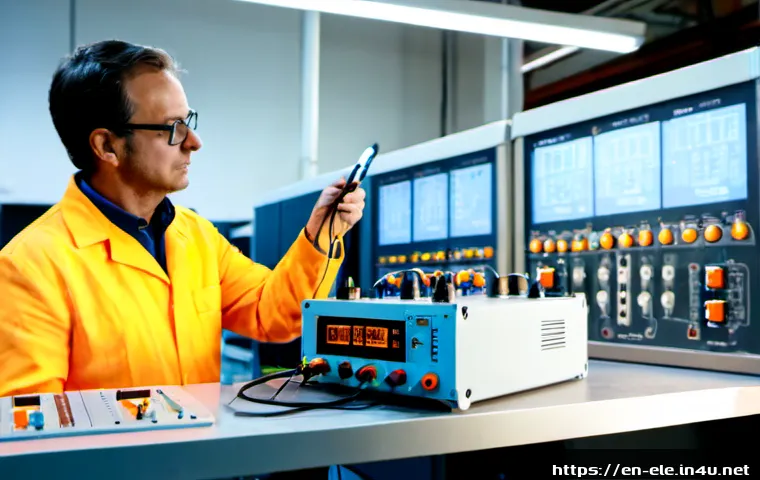
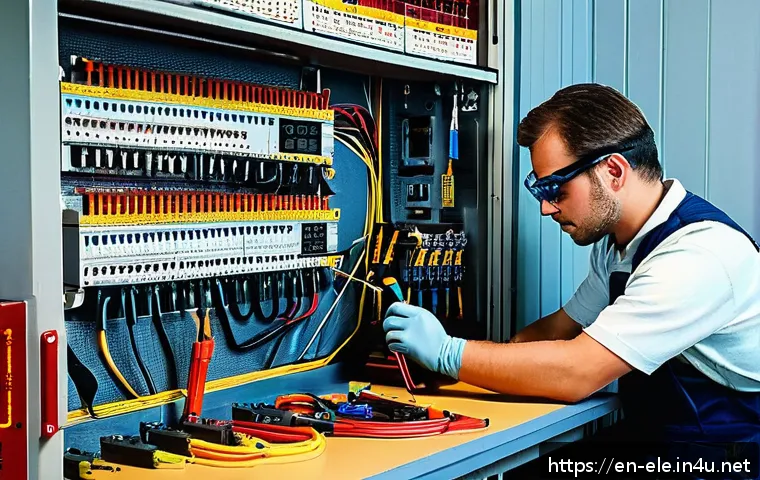
For years, I’ve had my hands deep in the wires, literally, experiencing the ins and outs of the electrical field firsthand. From troubleshooting complex industrial setups to wiring up the latest smart home gadgets, I’ve seen it all, and frankly, I’ve got a treasure trove of insights that I believe can genuinely help you, whether you’re a budding apprentice, a seasoned pro, or just someone looking to understand the mysterious world behind your outlets.
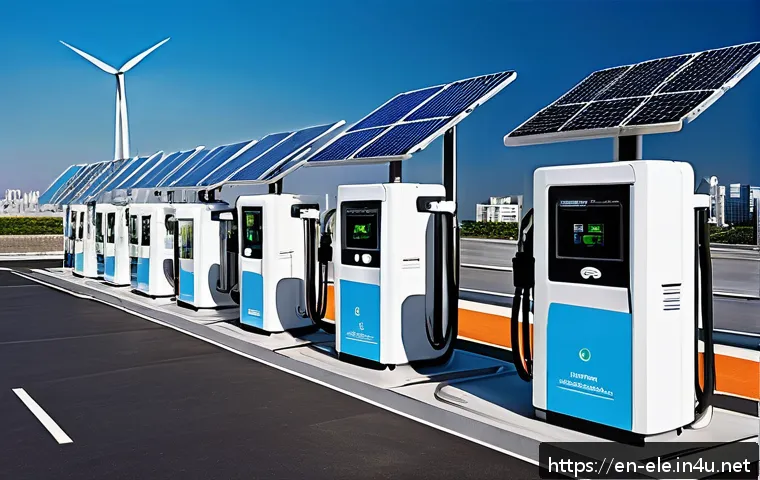
You know, the electrical landscape is changing at lightning speed. One minute we’re talking traditional circuits, and the next, it’s all about integrating solar panels, optimizing EV charging stations, and making our homes smarter than ever before.
It’s exhilarating, but it also means staying updated isn’t just a suggestion; it’s a necessity. I’ve personally navigated the learning curves of new technologies like integrating advanced smart home systems, and believe me, some lessons were learned the hard way – saving you the headache, thankfully!
My goal is always to cut through the jargon and give you the real-world perspective, the kind you won’t find in textbooks. I’ve spent countless hours on job sites, figuring out solutions on the fly, and there’s a certain satisfaction in knowing you’ve made a system safer, more efficient, and ultimately, more reliable.
This isn’t just theory; this is actual boots-on-the-ground knowledge that can save you time, money, and maybe even a spark or two. So, if you’re curious about the latest innovations in renewable energy, want to decode the mysteries of home automation, or simply looking for those clever shortcuts that only come with years of practical experience, you’ve come to the right place.
I’m going to pull back the curtain and share the practical tips, the honest challenges, and the rewarding triumphs from my journey in the electrical world.
Let’s explore it in detail!
Embracing the Smart Home Revolution: My Hands-On Experience
Integrating Legacy Systems with Cutting-Edge Tech
You know, when smart home technology first started to really take off, a lot of folks in our field were a bit skeptical. “Another gadget,” they’d say.
But I saw the potential, and I knew it was going to change how we approach residential wiring forever. I’ve personally had the exhilarating challenge of taking older homes – charming, character-filled places, but decidedly not smart – and transforming them into intelligent, responsive living spaces.
It’s not just about slapping on a smart switch; it’s about understanding the existing electrical infrastructure and knowing how to seamlessly integrate new Wi-Fi enabled devices, smart lighting systems, and voice-controlled hubs without causing a headache for the homeowner or, worse, creating a fire hazard.
There’s a real art to making sure that classic chandelier still looks amazing while being controlled by a sleek app on your phone. I remember one particular job in an old Victorian where the client wanted everything smart, but without seeing a single modern interface.
We ended up hiding all the controllers and using smart relays behind existing antique switch plates, creating a truly magical blend of old and new. It was a painstaking process, but the client’s delighted reaction was absolutely priceless.
That’s the kind of project that reminds you why you got into this field – solving complex puzzles with tangible, satisfying results. The key, I’ve found, is always meticulous planning and a deep understanding of both low-voltage control and high-voltage power.
It’s a dance, really, between the two, ensuring they work in harmony.
Beyond the Basics: Advanced Smart Home Automation Scenarios
Once you get past the initial setup of smart lights and thermostats, the real fun begins with advanced automation. I’ve spent countless hours configuring complex routines that genuinely simplify people’s lives.
Imagine a home where, when you unlock the front door, the lights in the entryway and kitchen gradually turn on, your favorite playlist starts softly, and the thermostat adjusts to your preferred evening temperature – all without touching a single switch.
I’ve built systems like this for clients, and the joy they express is incredibly rewarding. It’s not just about convenience; it’s about energy efficiency and security too.
I recall a project where we set up a “vacation mode” that randomized light schedules, played ambient sounds, and even opened and closed smart blinds at different times, making the house look occupied when the owners were away.
The sense of peace it gave them was immeasurable. For us electricians, this means understanding network protocols, API integrations, and sometimes even a bit of coding, which might sound intimidating at first.
But trust me, once you dive in, it opens up a whole new world of possibilities and greatly expands your service offerings. Staying ahead in this niche means constantly learning about new platforms and devices, and experimenting with them in your own home first – that’s my secret, I become the guinea pig!
Demystifying EV Charging Infrastructure: A Practical Guide
Residential EV Charger Installation: What You Really Need to Know
Alright, let’s talk about electric vehicles. It’s no secret they’re taking over the roads, and with that comes a huge demand for EV charging infrastructure, especially at home.
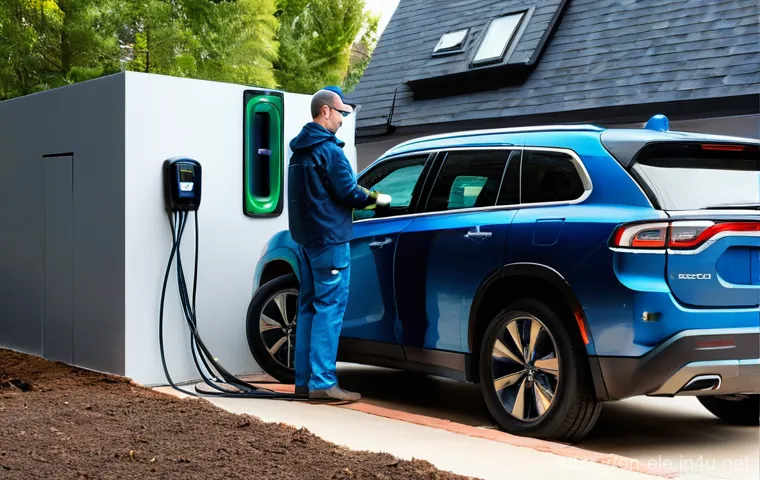
I’ve installed my fair share of residential EV chargers, and while it might seem straightforward, there are always nuances. The biggest challenge often comes down to available electrical panel capacity.
Many older homes simply aren’t designed to handle the extra load of a Level 2 charger pulling 40 to 80 amps. I’ve walked into situations where homeowners assumed they could just plug it in, only to find out their main panel was maxed out.
That’s where our expertise really shines. We often have to perform load calculations, sometimes upgrade the main breaker, or even install a whole new sub-panel.
I recently worked on a beautiful older home where the panel was barely adequate for the existing house, let alone a new EV charger. We ended up having to run a completely new, heavier gauge service line from the utility pole and upgrade the main panel, which was a significant undertaking, but absolutely necessary for safe and reliable charging.
It’s crucial to educate homeowners on the different levels of charging and what their existing electrical system can actually support before they even buy a charger.
Safety, as always, is paramount, and ensuring proper grounding and fault protection is non-negotiable.
Commercial and Multi-Unit Dwelling (MUD) Charging Solutions
Moving beyond the single-family home, commercial properties and multi-unit dwellings present a completely different beast when it comes to EV charging.
I’ve been involved in projects ranging from installing a few stations in an office parking lot to designing a comprehensive charging network for an entire apartment complex.
Here, it’s not just about individual capacity; it’s about load management, billing systems, and future-proofing. Imagine a scenario where twenty residents in an apartment building all come home and plug in their EVs around the same time.
Without intelligent load management, you’d trip the main breaker for the entire building in a heartbeat. That’s where smart charging systems come into play, dynamically distributing power to available vehicles without overloading the grid connection.
I recall a large apartment complex where we implemented a system that prioritized charging based on vehicle battery levels and tenant preferences, all while staying within the building’s electrical limits.
It was a complex setup involving specialized software and networking, but it allowed the property manager to offer a fantastic amenity without exorbitant infrastructure costs.
Understanding utility demand charges and potential rebate programs is also key for these larger installations, helping clients make smart financial decisions that impact their bottom line.
Diving Deep into Renewable Energy Systems: What I’ve Learned on the Ground
The Solar Installation Journey: From Rooftop to Grid
My journey into renewable energy began with solar panels, and let me tell you, it’s been an incredible ride. From the initial site survey to the final grid tie-in, every solar installation presents its own unique set of challenges and triumphs.
I’ve climbed more roofs than I can count, meticulously planning string configurations, conduit runs, and inverter placements. It’s not just about mounting panels; it’s about optimizing efficiency, ensuring structural integrity, and adhering to strict local codes.
I remember a particularly tricky installation on a beautifully landscaped property where the homeowner wanted zero visible conduits. We ended up running all the wiring through the attic and within wall cavities, which added significantly to the labor but resulted in an absolutely pristine finish that made the client incredibly happy.
Beyond the physical installation, there’s the critical aspect of sizing the system correctly for the client’s energy needs and understanding net metering agreements with the utility company.
It’s a blend of electrical engineering, construction savvy, and customer service. There’s nothing quite like flipping that switch for the first time and seeing a home start generating its own clean power; it’s a tangible step towards a more sustainable future, and I get to be a part of making that happen.
Beyond Solar: Exploring Battery Storage and Microgrids
While solar is often the entry point, the real game-changer in renewable energy, in my opinion, is battery storage. I’ve personally experienced the shift from purely grid-tied systems to hybrid setups that incorporate battery banks.
It’s truly empowering for homeowners to have energy independence, knowing they’ll have power even during an outage. I recently helped a client in a rural area who frequently experienced power interruptions.
Integrating a robust battery storage system with their existing solar array gave them peace of mind and eliminated the need for a noisy, polluting generator.
We configured the system to prioritize self-consumption, meaning they used their own generated solar power first, then drew from the battery, and only pulled from the grid as a last resort.
This significantly reduced their electricity bills and their reliance on the utility. Microgrids, while more complex, are also becoming a fascinating area.
Imagine a community or even a large commercial facility that can generate, store, and distribute its own power, completely disconnecting from the main grid if necessary.
I’ve been fortunate enough to consult on a few smaller-scale microgrid projects, and the level of intricate electrical coordination required is immense, but the resilience and sustainability benefits are undeniable.
It’s an exciting frontier, and I can’t wait to see how these technologies evolve.
Mastering Electrical Troubleshooting: My Personal Toolkit of Strategies
The Art of the Diagnostics: When Things Go Wrong
Every electrician knows that troubleshooting is where the rubber meets the road. It’s one thing to install a perfect system, but it’s an entirely different beast when something goes wrong, and you’re faced with a dead outlet, a flickering light, or a mysterious tripped breaker.
Over the years, I’ve developed a systematic approach that almost always leads me to the root cause. It starts with observation – listening to the client’s description, looking for visual cues, and sometimes even smelling for burnt insulation.
Then, it’s about isolating the problem. Is it a single device? A circuit?
An entire branch? My trusty multimeter is always my first line of defense, checking for voltage, continuity, and resistance. I recall a particularly perplexing case where a homeowner’s kitchen outlets would randomly go dead.
After hours of checking connections, breakers, and receptacles, I finally traced it back to a loose wire nut in a junction box that was hidden behind a rarely moved appliance.
It taught me that sometimes the most obvious solution is simply hidden from plain sight, and patience is your best friend. Don’t jump to conclusions; let the measurements guide you.
Common Problems and My Go-To Fixes
There are a handful of issues that seem to pop up more often than others, and having a ready set of solutions can save you a ton of time and frustration.
Flickering lights? Often a loose connection, either at the switch, fixture, or in the panel. Tripped breakers?
Overload is common, but also look for ground faults or short circuits – sometimes it’s as simple as a faulty appliance, other times it’s chewed wiring in the attic.
Dead outlets? Check the GFCI upstream, or a loose connection in another outlet on the same circuit. I’ve compiled a mental checklist over the years, and it’s become second nature.
One time, a client called me in a panic because half their house was without power after a storm. After a quick visual inspection, I discovered a burnt main service cable right where it entered the meter socket.
It was a classic case of corrosion leading to high resistance and heat, eventually failing. Knowing what to look for, even under stress, comes from experience and recognizing patterns.
It’s like being a detective, but instead of fingerprints, you’re looking for voltage drops and resistance readings.
| Common Electrical Issue | Probable Cause(s) | My Quick Fix/Troubleshooting Step |
|---|---|---|
| Outlet Not Working | Tripped GFCI (upstream), loose connection, tripped circuit breaker, faulty receptacle. | Check all GFCI outlets on the circuit first. Reset the breaker. Test voltage at outlet with multimeter. Inspect wiring at outlet. |
| Lights Flickering | Loose connection at fixture/switch/panel, overloaded circuit, faulty bulb, voltage fluctuations. | Tighten connections. Check bulb. Monitor for pattern (e.g., when large appliance turns on). Consult utility if widespread issue. |
| Circuit Breaker Trips Frequently | Overload, short circuit, ground fault, faulty appliance, worn-out breaker. | Unplug devices from circuit one by one to isolate overload. Check for damaged cords/wires. Test breaker continuity if suspected fault. |
| Burning Smell from Outlet/Panel | Overheating wires, loose connections, overloaded circuit, faulty component. | IMMEDIATELY turn off power to affected circuit/main. Inspect for scorch marks. DO NOT energize until problem is identified and fixed. |
| High Electricity Bills (no apparent cause) | “Phantom” loads, inefficient appliances, insulation issues, undetected electrical faults. | Use a clamp meter to measure current draw of individual circuits. Perform energy audit. Check for warm spots in walls/ceilings. |
The Unsung Heroes: Essential Tools That Make My Job Easier

My Must-Have Hand Tools for Every Job Site
You know, a good craftsman is only as good as their tools, and in the electrical world, that couldn’t be more true. Over my career, I’ve amassed quite the collection, but there are a few hand tools that are absolutely indispensable.
First up, my Klein Tools 11-in-1 screwdriver. Seriously, if you don’t have one, get one. It saves so much space and means I’m not constantly fumbling for different bits.
Then there are my trusty linesman pliers – not just for cutting and stripping, but for twisting wires, reaming conduit, and even using as a hammer in a pinch (don’t tell anyone!).
A good set of wire strippers that are comfortable in your hand and consistently make clean cuts is also a game-changer; I’ve gone through many, but I’ve settled on a specific brand now that feels like an extension of my hand.
And of course, a reliable voltage tester – I prefer a non-contact one for quick checks, but a quality multi-meter is non-negotiable for accurate readings.
I still remember starting out with a cheap set of tools that constantly let me down, and the frustration was immense. Investing in quality tools isn’t just about durability; it’s about efficiency, safety, and ultimately, pride in your work.
Power Tools and Specialized Equipment I Swear By
When it comes to power tools, the landscape has changed dramatically. Cordless is king, and for good reason. My go-to is my Milwaukee M18 drill and impact driver set; the battery life is phenomenal, and they’re powerful enough for anything I throw at them.
No more dragging cords across job sites – it’s a huge time-saver and safety improvement. For heavier tasks, like breaking out concrete for conduit runs, a quality rotary hammer drill is absolutely essential.
I also can’t talk about specialized equipment without mentioning my thermal imager. This piece of tech has been a lifesaver more times than I can count.
It allows me to quickly identify overheating connections, overloaded circuits, and even hidden electrical issues behind walls without having to tear anything apart.
I once found a dangerously loose connection in a commercial panel that was running extremely hot, simply by scanning it with the thermal camera. Without it, that problem could have escalated into a serious fire.
These aren’t cheap investments, but the time saved, the accuracy gained, and the enhanced safety they provide make them worth every single penny.
Navigating the National Electrical Code: From Theory to Practice
Decoding the NEC: Why It’s Your Best Friend (Even When It’s Annoying)
Okay, let’s be real. The National Electrical Code (NEC) can sometimes feel like a dense, intimidating textbook, full of rules and regulations that seem overly complicated.
But as someone who’s spent years in the field, I can tell you unequivocally: the NEC is your absolute best friend. It’s not just a collection of arbitrary rules; it’s the culmination of decades of experience, data, and hard-learned lessons, all designed to ensure safety and prevent electrical hazards.
I remember early in my career, I’d sometimes try to find shortcuts, thinking I knew better. Then I’d run into an issue, perhaps a receptacle that was just a bit too close to a sink, or a conduit fill that was slightly over capacity, and I’d realize exactly why the code was written that way.
It’s all about minimizing risk – preventing fires, shocks, and equipment damage. I’ve seen firsthand the devastating consequences when code isn’t followed.
Understanding the “why” behind the “what” makes the NEC less of a burden and more of a powerful guide. It’s a living document, constantly updated, and staying current with its revisions is just part of being a responsible, professional electrician.
It’s also your legal protection, ensuring your work meets accepted standards.
Local Amendments and Permitting: Navigating the Red Tape
While the NEC provides the baseline, it’s crucial to remember that local jurisdictions often have their own amendments and specific permitting requirements that can add another layer of complexity.
What’s perfectly acceptable in one county might require a different approach or additional inspections just across the state line. I’ve had jobs where I’ve had to spend considerable time researching specific city ordinances regarding conduit types, burial depths, or even the placement of outdoor receptacles.
It can be a pain, no doubt. I recall one project where a seemingly straightforward commercial panel upgrade turned into a prolonged affair because the local fire marshal had a specific, non-NEC related requirement for emergency shut-off labels that I wasn’t initially aware of.
It delayed the final inspection by a week. My advice? Always, always check with the local authority having jurisdiction (AHJ) before you start any significant project.
A quick phone call or a visit to their website can save you immense headaches, costly rework, and embarrassing delays down the line. It’s part of doing your due diligence and demonstrating your professionalism, ensuring a smooth process from start to finish for both you and your client.
Real-World Project Management in Electrical Installations: Beyond the Blueprint
Effective Planning and Scheduling for Smooth Operations
Executing an electrical project, whether it’s a residential renovation or a large commercial build-out, is far more than just connecting wires. It’s a symphony of planning, scheduling, and coordination.
I’ve learned that the most successful projects are the ones where the planning is meticulous. It starts with a thorough understanding of the scope, collaborating with other trades – plumbers, HVAC, carpenters – to avoid clashes, and then creating a realistic timeline.
I once took over a project that was significantly behind schedule because the previous electrician hadn’t accounted for lead times on specialized switchgear.
It taught me a vital lesson: never underestimate the impact of material procurement. Now, before I even lift a tool, I’m confirming availability, delivery dates, and staging areas.
A well-organized job site is a safe and efficient job site. This also extends to scheduling your team. Knowing who is doing what, when, and with what materials, keeps things running like a well-oiled machine.
It’s about being proactive, anticipating potential roadblocks, and having contingency plans ready. This careful preparation not only keeps the project on track but also ensures a much happier client and a less stressed crew.
Client Communication and Managing Expectations
Beyond the technical aspects, one of the most critical elements of project management that often gets overlooked is client communication. I mean, we’re dealing with people’s homes and businesses, and electricity is often perceived as a mysterious force.
Keeping clients informed, managing their expectations, and being transparent about progress and any unforeseen challenges is paramount. I’ve found that proactive communication can defuse potential issues before they escalate.
For instance, if a wall needs to be opened up unexpectedly for a new circuit, I immediately inform the client, explain why it’s necessary, and discuss the restoration plan.
Nobody likes surprises, especially when they involve their property or their wallet. I remember a small renovation where the homeowner changed their mind about a light fixture placement halfway through rough-in.
Instead of getting frustrated, I calmly explained the implications for wiring and offered alternatives, which led to a solution everyone was happy with.
Building that trust through open and honest dialogue is invaluable. It transforms a client into a partner and often leads to glowing recommendations, which, let’s be honest, is the best kind of advertising we can get in this business.
Wrapping Things Up
And there you have it, folks! What a journey we’ve taken through the dynamic world of modern electrical work. From transforming old homes into smart sanctuaries and demystifying EV charging, to harnessing the power of the sun and mastering the art of troubleshooting, it’s clear that our field is constantly evolving. My hope is that sharing these insights, straight from my hands-on experiences, gives you a clearer picture of the incredible opportunities and vital responsibilities we carry. It’s truly a rewarding profession, constantly pushing us to learn, adapt, and innovate, all while ensuring the safety and comfort of our communities. I genuinely love what I do, and seeing the positive impact of well-executed electrical work never gets old. Stay curious, keep learning, and remember that every connection we make contributes to a brighter, more efficient future!
Handy Tips for Your Electrical Projects
Here are a few nuggets of wisdom I’ve picked up over the years that I think you’ll find incredibly useful, whether you’re a fellow pro or a savvy homeowner:
1. Plan Ahead for Smart Home Upgrades: Before you buy a single smart device, map out your entire home automation vision. Think about what you want to control, how you want it to interact, and consider future expansions. A little planning prevents a lot of headaches later on and ensures seamless integration, saving you both time and money. It’s like building a house – a solid foundation makes all the difference.
2. Assess Your Electrical Panel Before EV Charger Installation: This is a big one. Don’t assume your existing electrical panel can handle a Level 2 EV charger. Always have a qualified electrician perform a load calculation. Many older homes require a service upgrade or a sub-panel to safely accommodate the significant power draw, and getting this right from the start avoids costly surprises and potential hazards.
3. Explore All Renewable Energy Incentives: When considering solar or battery storage, don’t just look at the upfront cost. Research federal tax credits, state rebates, and local utility incentives. These programs can significantly reduce your out-of-pocket expenses and make renewable energy solutions far more financially attractive than you might initially think. It pays to do your homework!
4. Learn Basic Electrical Safety – It’s Non-Negotiable: Even if you’re not an electrician, understanding fundamental safety practices is crucial. Always turn off power at the breaker before working on any outlet or fixture. Invest in a non-contact voltage tester to confirm circuits are dead. And if you’re ever unsure about a task, especially anything beyond replacing a light switch, call a licensed professional. Your safety, and the safety of your home, is paramount.
5. Invest in Quality Tools, They’re Worth Every Penny: Whether you’re a professional or just tackling DIY projects, reliable tools make all the difference. A good multimeter, comfortable wire strippers, and a sturdy screwdriver set aren’t just about making the job easier; they’re about accuracy, efficiency, and safety. Cheap tools often lead to frustration, poor results, and can even be dangerous in the long run.
Key Takeaways from the Field
Reflecting on everything we’ve discussed, a few critical points really stand out as foundational to success in the electrical world. Firstly, unwavering commitment to safety isn’t just a rule; it’s the very bedrock of our profession. Every decision, every connection, every installation must prioritize preventing hazards and protecting lives and property. Secondly, the pace of technological advancement demands a mindset of continuous learning. From smart home tech to sophisticated EV infrastructure and evolving renewable energy systems, staying current isn’t an option, it’s a necessity. This proactive approach ensures we remain true experts and authorities in a rapidly changing landscape. Finally, the value of clear communication and genuine human connection cannot be overstated. Building trust with clients, collaborating effectively with colleagues, and transparently managing expectations transforms complex projects into rewarding partnerships. Embrace the challenges, celebrate the innovations, and never stop honing your craft – because in this field, every day is an opportunity to power progress.
Frequently Asked Questions (FAQ) 📖
Q: With so many smart home gadgets hitting the market, how do you even begin to integrate them into an existing electrical system without turning your house into a spaghetti factory of wires and incompatible tech? I’ve heard some horror stories!
A: Oh, trust me, I’ve seen my fair share of “spaghetti factories” over the years, and it’s definitely something you want to avoid! When it comes to diving into smart home integration, the biggest tip I can give you, from personal experience, is to think about your “ecosystem” first.
Don’t just buy a bunch of cool gadgets willy-nilly. Picture this: I once had a client who bought a smart thermostat, smart lights from a different brand, and a smart doorbell from yet another company, and they were all fighting each other like grumpy siblings.
It was a nightmare to get them to cooperate! The trick, my friend, is starting with a central hub or a platform that’s known for its broad compatibility, like one of the major voice assistant platforms or a robust home automation system.
Systems built on standards like Matter are truly simplifying things now, making it easier for devices from different brands to chat nicely. From my hands-on work, I’ve found that focusing on energy efficiency and convenience generally gives you the most bang for your buck.
Think smart thermostats that learn your schedule, saving you some serious cash on your energy bills, or smart lighting that adapts to your mood and turns off when you leave a room.
These systems aren’t just about showing off; they genuinely improve your daily life and can even boost your home’s security with integrated cameras and smart locks.
The real magic happens when these devices aren’t just “smart” but “smartly integrated.” This often means having a professional, like yours truly, help ensure your existing wiring can handle the new load and that everything is talking to each other safely and efficiently.
There’s nothing worse than investing in cutting-edge tech only to have it bottlenecked by outdated wiring, so a thorough electrical inspection is always a smart first step to make sure your home’s backbone is ready for the future.
Q: Renewable energy, especially solar, and EV charging are popping up everywhere. What’s the real deal for homeowners looking to jump on that bandwagon? Is it worth the investment, and what should we be looking out for?
A: That’s a fantastic question, and one I get asked all the time! I’ve been working with solar and EV charging installations for a while now, and let me tell you, the landscape is electrifying, pun intended!
For homeowners, it’s absolutely becoming more accessible and, yes, often worth the investment. Think about it: generating your own power with solar panels and then using that clean energy to charge your electric vehicle?
That’s not just eco-friendly; it’s a huge step towards energy independence and can seriously trim down those monthly utility bills. We’ve seen some incredible advancements in residential solar, especially with integrated battery storage systems becoming more efficient and affordable.
These batteries are game-changers, letting you store excess solar power generated during the day and use it at night, or even as a backup during outages.
I’ve personally helped families set up systems where they hardly draw any power from the grid during peak hours, and the look on their faces when they see their first minimal electric bill is priceless!
When it comes to EV charging at home, it’s quickly becoming the dominant way to refuel your car. We’re seeing a big push for smart charging solutions that let you optimize when and how your car charges, often integrating with your solar setup to maximize savings by charging during off-peak hours or when your panels are producing the most power.
The key is looking for Level 2 chargers for home, as they offer a great balance of speed and convenience. My biggest piece of advice here: talk to an electrician experienced in both solar and EV installations.
They can help you assess your home’s specific needs, navigate local incentives that can significantly reduce your upfront costs, and ensure your system is properly sized and safely installed.
You want a system that’s not just functional today, but future-proofed for whatever comes next in the world of clean energy.
Q: The electrical field seems to be changing at warp speed! How do you, as an experienced pro, manage to stay on top of all the new technologies, codes, and best practices? It feels overwhelming for an outsider!
A: You hit the nail on the head – “warp speed” is exactly right! It can definitely feel overwhelming, even for us seasoned pros. I’ve been elbows deep in this stuff for years, and one thing I’ve learned is that learning never stops.
You know, I remember when smart home tech was just a futuristic concept, and now it’s practically standard! To stay sharp, it’s a multi-pronged approach, almost like a lifestyle, really.
First off, continuous education is non-negotiable. I’m constantly diving into workshops, seminars, and specialized training programs, often offered by industry associations or manufacturers themselves.
These aren’t just dry lectures; they’re hands-on sessions where you get to tinker with the latest gadgets and understand the nitty-gritty of new systems, like advanced smart home controls or the ins and outs of large-scale battery storage.
Online courses and webinars have become a lifesaver, allowing me to learn new things from my home office, which is super convenient. Beyond formal training, I’m a huge believer in staying connected with the wider electrical community.
I subscribe to several industry publications, both print and online, that keep me updated on new technologies, evolving electrical codes, and best practices.
These journals often feature case studies and expert analyses that give you a real-world perspective. And honestly, chatting with other electricians, whether at trade conferences or in online forums, is invaluable.
There’s nothing quite like hearing about someone else’s unique challenges and solutions to broaden your own expertise. Staying technologically literate is now just part of the job description.
It’s about being proactive, curious, and always ready to embrace the next big thing, because in this field, if you’re not moving forward, you’re definitely falling behind!